Table of Contents
When I first stepped onto a modern smart farm, I was struck by how much technology had transformed agriculture. Among all the innovations, the soil moisture sensor stood out as one of the most impactful tools. Small, precise, and intelligent, these devices are changing how farmers monitor soil health, optimize irrigation, and ensure sustainable crop production.
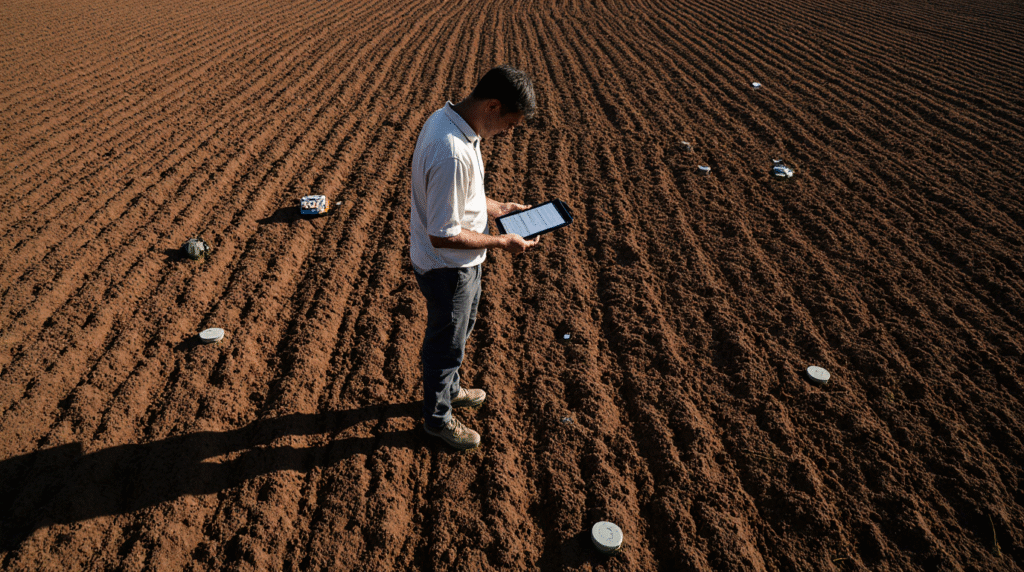
At AgriGloba, our mission has always been to integrate cutting-edge technology with practical farming solutions. Soil moisture sensors are at the core of our strategy. They combine with AI, drones, and smart irrigation systems to enhance efficiency. This approach improves productivity and promotes sustainability.
Understanding Soil Moisture Sensors
A soil moisture sensor measures the water content in soil, providing critical insights for irrigation management. These sensors help farmers determine exactly when and how much to water crops. They prevent over-irrigation. This approach conserves resources and maintains soil health.
There are various types of sensors used in agriculture, including resistive, capacitive, tensiometric, and advanced time-domain reflectometry (TDR) models. Each type offers distinct advantages depending on the farm’s soil type, crop requirements, and environmental conditions.
Integrating Sensors into Smart Agriculture
Modern farms are increasingly data-driven. Soil moisture sensors feed real-time data into farm management platforms, allowing farmers to monitor soil conditions and make informed decisions. At AgriGloba, this data is integrated into AI-powered systems that provide actionable recommendations, improving irrigation efficiency and crop yield.
Farmers can now visualize soil moisture trends across fields. They can detect dry zones. They can also schedule irrigation precisely. This reduces water consumption and maximizes plant growth.
Different Types of Soil Moisture Sensors and Their Applications
| Sensor Type | Primary Application | Advantages | Considerations |
|---|---|---|---|
| Resistive | General soil moisture detection | Cost-effective, simple | May degrade over time |
| Capacitive | Targeted irrigation | Accurate, durable | Higher initial cost |
| Tensiometric | Orchards, vineyards | Reliable in variable soils | Needs calibration |
| TDR | Large-scale research & precision farms | Highly precise | Expensive |
Each sensor type can be matched with specific crops and soil types. This matching process allows farmers to select the most effective solution for their needs.
Real-Time Data for Precision Farming
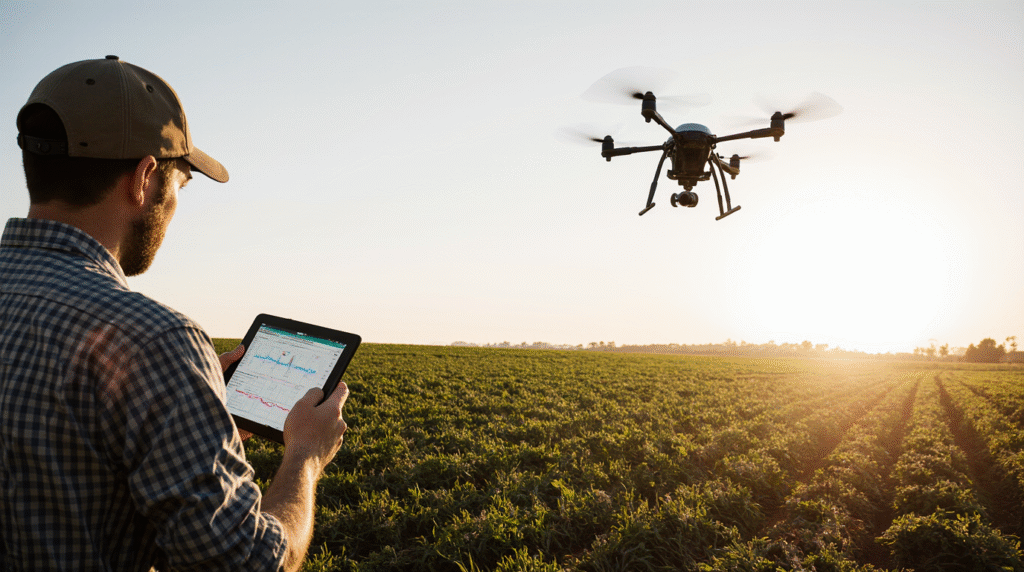
The real power of soil moisture sensors lies in real-time monitoring. Data collected allows farmers to see the exact water needs of their crops at any moment.
AgriGloba integrates this data with AI algorithms that predict soil behavior, anticipate drought stress, and optimize irrigation schedules across farms. This proactive approach reduces water waste and ensures crops remain healthy.
AI and Soil Moisture Sensors
Artificial intelligence amplifies the value of sensor data. AI models can detect patterns, forecast irrigation needs, and highlight areas at risk for disease or nutrient deficiencies.
Farmers using AgriGloba’s AI-powered platforms receive tailored recommendations. Instead of raw data, their decision-making is transformed into a precise, efficient, and profitable process.
Drones as Data Collection Partner
Drones complement soil moisture sensors by providing aerial mapping and monitoring. Overlaying sensor readings onto drone imagery allows farmers to visualize soil hydration across large fields. They can also detect irregularities that require attention.
At AgriGloba, drone-assisted monitoring enhances field management by offering a bird’s-eye view of irrigation performance and crop health.
Smart Irrigation Systems
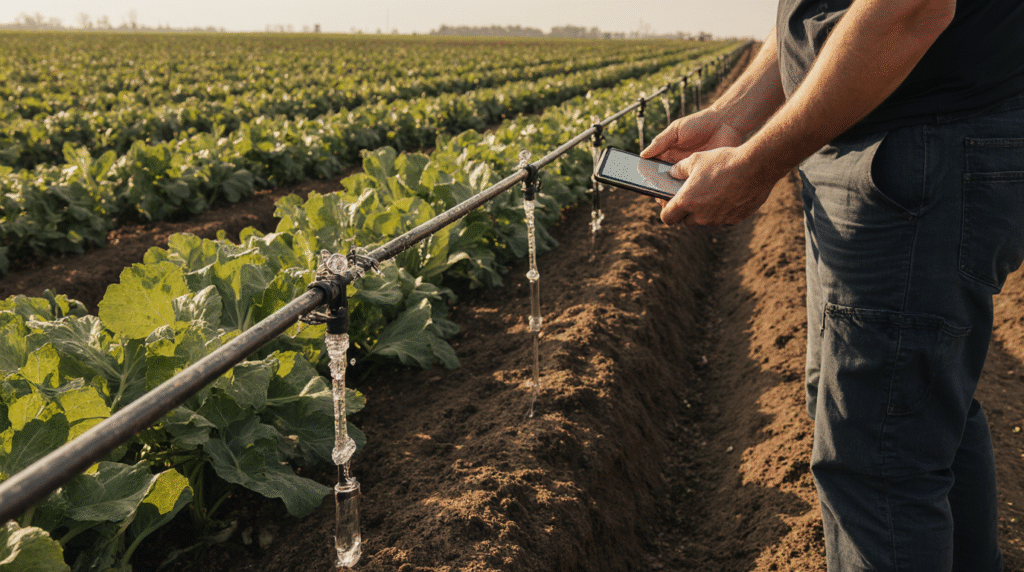
Traditional irrigation often leads to water waste. Smart irrigation systems connected to soil moisture sensors water only when and where it’s needed.
Drip irrigation systems controlled by sensor data deliver precise water doses, ensuring crops receive optimal hydration without wasting resources. AgriGloba farms implementing this technology have achieved both higher yields and significant water savings.
Optimal Sensor Placement
Correct placement of sensors is essential for accurate readings. Sensors should be installed at varying depths to capture full soil moisture profiles.
AgriGloba provides guidance on placement, ensuring sensors reflect real field conditions. Proper installation allows for actionable insights and more efficient irrigation decisions.
Training Farmers on Sensor Technology
Technology adoption is only effective if farmers know how to use it. AgriGloba runs comprehensive training programs. These programs teach farmers to interpret soil moisture readings. They also help integrate data with irrigation schedules. Additionally, farmers learn to maintain sensor equipment.
Hands-on workshops empower farmers to make informed decisions and maximize the benefits of sensor-driven farming.
Partnerships Driving Agri-Tech Growth
AgriGloba collaborates with research institutes, sensor manufacturers, and local farms to innovate in soil moisture sensing and irrigation technology. These partnerships accelerate the adoption of sustainable agriculture practices, enabling small and medium farms to benefit from high-tech solutions.
Collaborative initiatives also facilitate knowledge sharing and the development of custom solutions tailored to specific crops, soils, and climates.
Environmental Impact of Soil Moisture Sensors
Water conservation is a global priority, and soil moisture sensors are a critical tool in this effort. By enabling precise irrigation, these sensors minimize water waste, reduce runoff, and protect local ecosystems.
AgriGloba’s sustainable farming projects demonstrate how technology can balance productivity with environmental stewardship.
Economic Advantages
Investing in soil moisture sensors yields significant economic benefits. Farms experience:
- Reduced water costs
- Lower labor requirements
- Improved crop yield and quality
- Efficient fertilizer application
The ROI is often realized within one or two growing seasons, making sensors both an ecological and economic investment.
Sensor Maintenance and Longevity
Regular calibration ensures sensors remain accurate. Proper cleaning and monitoring prevent malfunctions and extend their lifespan.
AgriGloba provides continuous support, ensuring farmers maintain peak performance from their sensor networks.
Sensor Applications Across Crop Types
- Cereal Crops: Improve irrigation efficiency and reduce drought stress.
- Vegetables: Ensure optimal soil hydration to enhance growth and prevent overwatering.
- Fruits and Vineyards: Maintain precise water levels to improve yield and fruit quality.
Data Analysis for Smarter Farming
Data from soil moisture sensors can be aggregated and analyzed to identify trends, plan crop rotations, and optimize resource use.
AgriGloba’s analytics platforms help farmers turn raw sensor data into actionable insights, allowing smarter, more efficient farming operations.
Integrating Multiple Technologie
The combination of sensors, drones, AI, and smart irrigation creates a synergistic effect. Each component enhances the others, resulting in comprehensive field monitoring and management.
This holistic approach ensures that farms operate at peak efficiency while minimizing environmental impact.
Future of Soil Moisture Sensing
As sensor technology evolves, we expect greater accuracy, lower costs, and improved integration with other agri-tech solutions.
AgriGloba is actively exploring advanced sensor networks, IoT connectivity, and predictive AI models to continue driving innovation in precision agriculture.
Supporting Local and Global Farmer
By sharing knowledge and technology, AgriGloba supports both local farmers in Morocco and international partners. Training, workshops, and collaborative projects empower farmers worldwide to adopt sensor-driven precision farming.
Real-World Case Studies
In one AgriGloba pilot project, farms utilized soil moisture sensors. They followed AI-driven irrigation schedules. This approach reduced water usage by 35%. It also increased crop yield by 20%.
Such case studies showcase the tangible benefits of integrating sensors into modern agriculture.
Building Sustainable Farming Ecosystems
By combining technology, training, and data, AgriGloba helps farmers build sustainable ecosystems that balance productivity with environmental responsibility.
Precision irrigation using soil moisture sensors is just one example of how small interventions can produce large-scale benefits.
Economic and Social Benefits
Beyond yield improvement, sensor-driven agriculture creates employment opportunities in technology management, data analysis, and precision farming operations.
AgriGloba encourages youth participation through innovation hubs and training programs, helping develop the next generation of agri-tech professionals.
s
One of the exciting developments I’ve seen is the use of multi-layer soil moisture sensor networks. Sensors are installed at multiple soil levels. This approach provides a 3D view of moisture distribution, instead of measuring water content at a single depth.
This allows farmers to detect root zone dryness, optimize irrigation for deeper roots, and prevent overwatering of surface soil. AgriGloba has implemented such networks in large-scale farms, and the results are impressive: higher crop resilience and better resource management.
Combining Sensors with Weather Data
Soil moisture sensors become even more powerful when combined with weather data. AI models can predict rainfall impact, evaporation rates, and potential drought stress.
For instance, if a sensor detects low soil moisture, but rain is forecasted, the irrigation system can delay watering. This saves water and energy. AgriGloba integrates these predictive models into their farm management platforms, giving farmers actionable insights in real time.
Soil Moisture Sensors in Greenhouses
Greenhouse farming benefits greatly from soil moisture sensors. Controlled environments allow precise water delivery, temperature monitoring, and nutrient management.
At AgriGloba, we use sensor data in greenhouses to fine-tune irrigation schedules, reduce humidity-related diseases, and maintain optimal growth conditions. This ensures consistent crop quality and minimizes losses.
Training Programs for Advanced Sensor Use
Beyond installation, AgriGloba emphasizes education. Farmers learn not only to read sensor outputs but also to interpret trends over time.
Training sessions include:
- Understanding seasonal soil moisture patterns
- Calibrating sensors for different soil types
- Integrating sensor data with farm management software
These programs empower farmers to make confident, data-driven decisions.
Case Study: Vineyard Precision Irrigation
In one vineyard managed by AgriGloba, soil moisture sensors were deployed at multiple depths. The sensors detected dry zones in early spring, allowing precise water delivery.
The result: a 25% reduction in water usage, healthier vines, and grapes with higher sugar content. This example highlights the economic and environmental benefits of sensor-guided irrigation.
Data Analytics for Crop Forecasting
Sensor data doesn’t just inform irrigation—it supports crop forecasting. By analyzing moisture trends, soil texture, and weather data, AI models predict growth rates, yield potential, and stress points.
This predictive capability allows AgriGloba to advise farmers on planting schedules, fertilizer application, and harvest timing.
Integration with Drones for Crop Monitoring
Drones equipped with multispectral cameras can complement soil moisture sensors by visualizing plant health, canopy cover, and water stress.
AgriGloba combines sensor readings with drone imagery to create detailed field maps. Farmers can see exactly where irrigation adjustments are needed and which areas require attention, optimizing labor and resource allocation.
Sustainable Agriculture Impact
Water conservation is critical. Sensors reduce unnecessary irrigation, prevent soil degradation, and promote sustainable water use.
By adopting soil moisture sensors, farmers reduce their environmental footprint while maintaining high productivity. AgriGloba actively promotes this approach to support global sustainable agriculture goals.
Economic Advantages for Farmers
Investment in soil moisture technology pays off quickly. Some tangible benefits include:
| Benefit | Impact |
|---|---|
| Reduced water costs | Up to 35% savings per season |
| Increased crop yield | 10–20% improvement depending on crop |
| Labor efficiency | Less manual irrigation management |
| Reduced fertilizer runoff | Targeted watering prevents nutrient loss |
These advantages make sensors an essential tool for modern farms seeking profitability and sustainability.
Collaboration and Partnerships
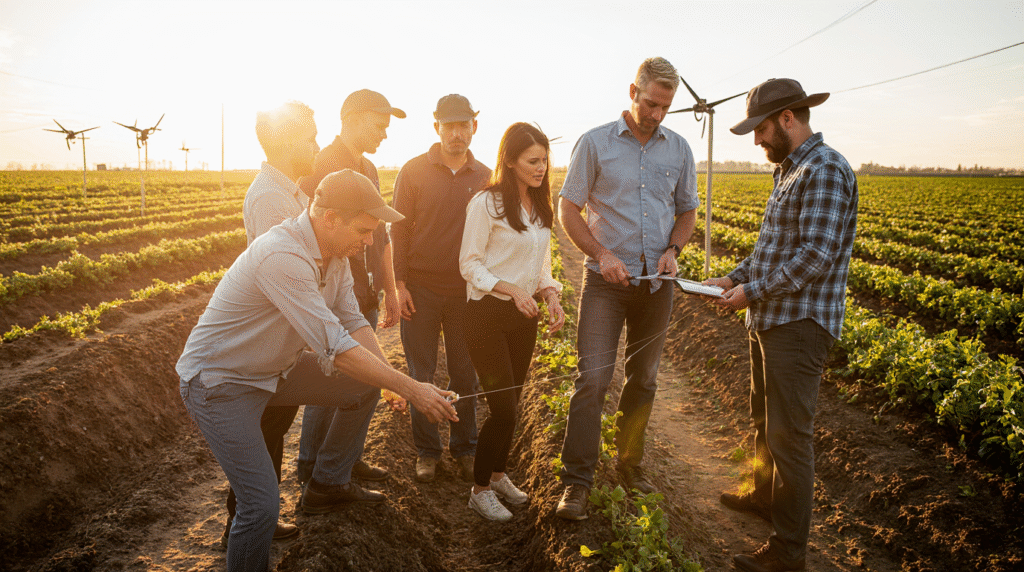
AgriGloba works with sensor manufacturers, research institutions, and local farmers to advance technology adoption. These partnerships allow:
- Testing new sensor models in real-world conditions
- Sharing best practices across regions
- Supporting local agritech startups
Collaborative efforts help bring innovation to farms of all sizes, ensuring technology benefits everyone.
Maintenance and Sensor Longevity
Proper maintenance ensures sensors continue to deliver accurate data. Regular calibration, cleaning, and monitoring for corrosion or damage are critical.
AgriGloba provides ongoing support, including remote diagnostics, replacement schedules, and troubleshooting guides. This proactive maintenance extends sensor lifespan and ensures reliable performance.
Adoption in Emerging Markets
Soil moisture sensors aren’t just for large commercial farms. Small and medium-sized farms, particularly in emerging markets, can benefit enormously.
AgriGloba’s modular sensor systems are affordable and scalable, allowing smaller farms to adopt precision irrigation without heavy capital investment.
Future Innovations
Looking forward, we anticipate:
- Wireless sensor networks with real-time cloud integration
- AI-driven automated irrigation adjustments
- Low-cost sensors for smallholder farms
- Advanced analytics integrating soil, climate, and crop data
These innovations will continue to make soil moisture sensors indispensable for modern agriculture
Community and Knowledge Sharing
Beyond technology, AgriGloba fosters a community of knowledge sharing. Farmers exchange insights, best practices, and data interpretations.
Workshops, webinars, and field demonstrations help farmers stay updated on sensor technology, AI integration, and sustainable practices.
Final Thoughts on Soil Moisture Sensors
Every time I walk through fields equipped with sensors, I am reminded of their transformative power. Soil moisture sensors are more than measurement devices—they are enablers of smarter, sustainable, and profitable farming.
AgriGloba integrates AI, drones, and smart irrigation. Comprehensive training ensures these sensors are not just tools. They form a foundation for future-ready agriculture.
The combination of technology, education, and sustainability creates farms that are resilient, productive, and environmentally responsible.
Conclusion: Soil Moisture Sensors and the Future of Farming
Every day, I see the impact of soil moisture sensors firsthand. They are more than measurement tools—they are enablers of smarter, sustainable, and profitable agriculture.
With AgriGloba’s expertise in AI, drones, smart irrigation, and farmer training, these sensors are helping shape the future of farming. The integration of technology into agriculture is no longer optional—it is essential for feeding the world responsibly.