Table of Contents
Smart Irrigation System
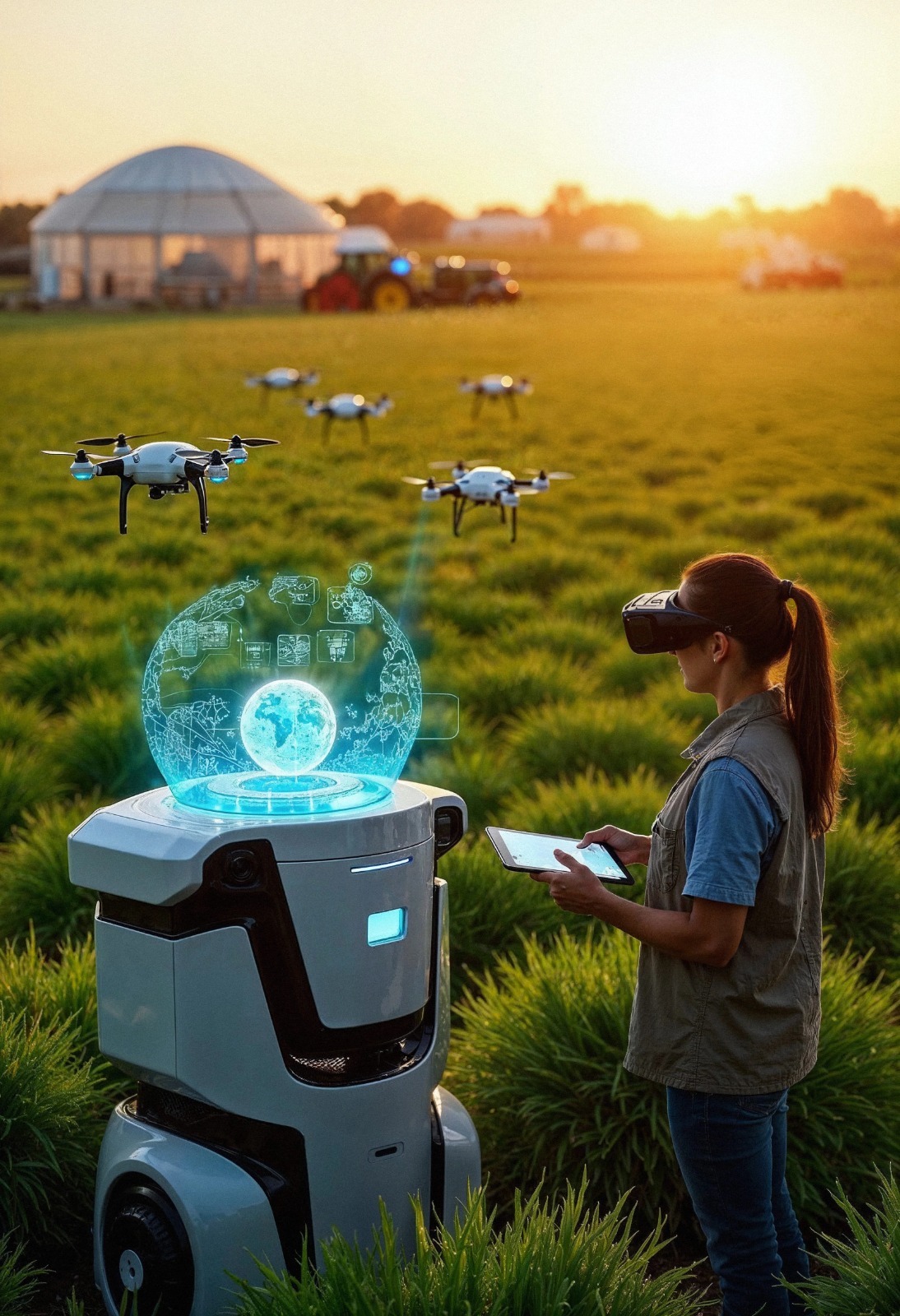
Working in agriculture for over twenty-five years, I’ve seen firsthand how unpredictable farming can be. There were seasons of abundance, and seasons where a single drought wiped out months of work. I remember walking the fields at sunrise. I felt the soil crumble under my feet. I knew that every drop of water mattered. Back then, irrigation was guesswork, dependent on experience and rainfall patterns. Today, with the smart irrigation system, those uncertainties are almost a thing of the past. Watching the system adjust water flow in real-time is like seeing the land breathe intelligently. It’s precision farming in its most human and emotional form, bridging technology and tradition seamlessly.
Understanding the Smart Irrigation System
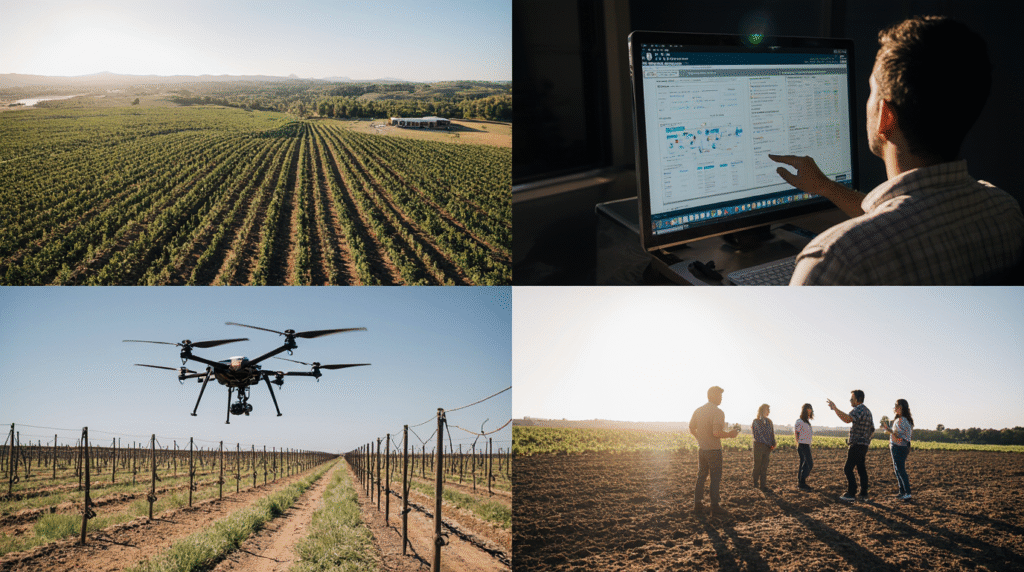
A smart irrigation system is not merely a set of sprinklers or drip lines. It is an interconnected network of soil sensors, automated valves, and weather stations. Cloud-based software connects all components to deliver water precisely where it’s needed. On farms where these systems operate, soil moisture is uniform. Plants experience less stress. Water is conserved in ways that were unimaginable just a decade ago. I still remember observing a heatwave. The system adjusted the irrigation schedule automatically. The crops survived without intervention. I felt a profound sense of relief and trust in the technology. It’s no exaggeration to say that smart irrigation transforms farming from guesswork to science.
Linking Technology to Sustainability
At AgriGloba, sustainability is not just a buzzword; it is the core of our mission. Water scarcity is one of the biggest challenges for farmers worldwide, and over-irrigation has historically damaged soils and ecosystems. Implementing a smart irrigation system ensures water is used efficiently, soil remains healthy, and environmental impact is minimized. I’ve seen farmers who were initially skeptical about adopting these systems. They became advocates after witnessing improved yields. They also noticed lower costs and reduced stress on the land. Sustainable agriculture is no longer an idealistic vision — with the right technology, it is a tangible reality.
The Role of Artificial Intelligence
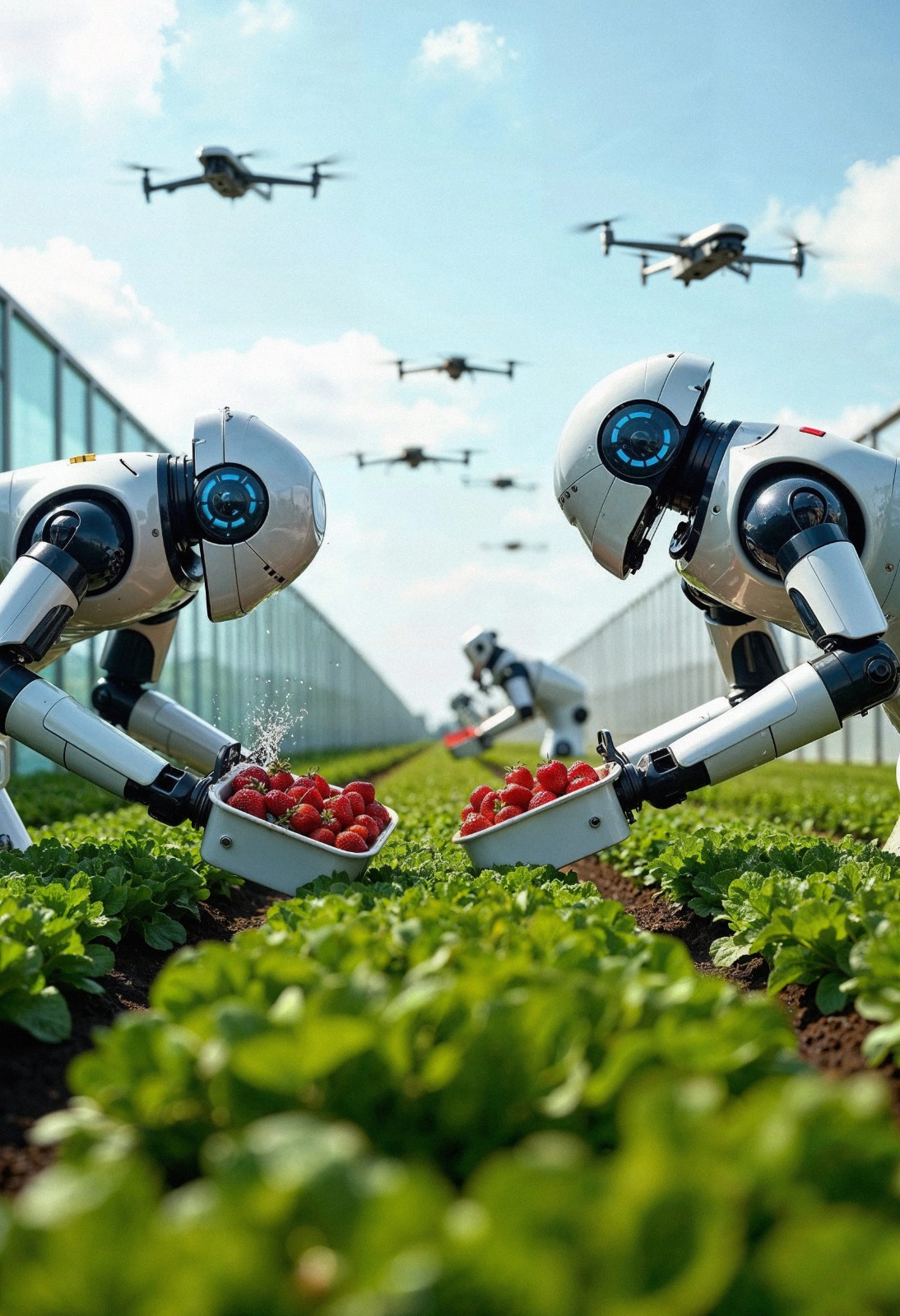
Artificial intelligence is revolutionizing irrigation management. AI continuously processes data from soil sensors, weather stations, and crop models to predict water needs accurately. I remember a tomato farm where AI detected a moisture deficit before the plants even showed signs of stress. The system automatically adjusted irrigation, preserving yield quality and conserving water. For farmers, this reduces anxiety and allows them to focus on other aspects of farm management. It’s like having a vigilant, tireless partner working alongside you, ensuring that every decision is the right one.
Drones and Precision Agriculture
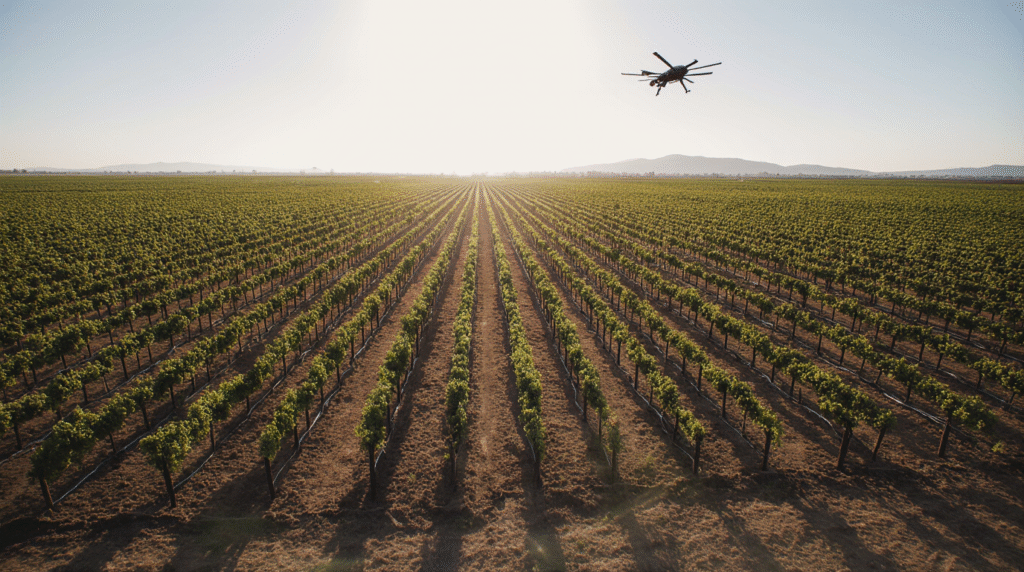
Drones have become indispensable in modern farming. High-resolution aerial imagery allows farmers to detect areas of stress, soil inconsistencies, and growth variations invisible to the naked eye. When combined with a smart irrigation system, drones enable precise interventions. I recall a vineyard in Morocco where drone data revealed subtle moisture differences across the fields. Adjusting irrigation accordingly led to more uniform grape clusters and significant water savings. The combination of drones and smart irrigation turns data into action, creating a new level of efficiency in agriculture.
Data Analysis: Turning Insights into Results
Data is the lifeblood of smart irrigation. Soil moisture, nutrient levels, temperature, and weather patterns are constantly collected and analyzed. Platforms translate this raw data into actionable insights for farmers. On one experimental farm, adopting the system reduced overwatering by 40%, improved soil quality, and increased yield consistency. Data-driven irrigation allows farmers to transition from reactive to proactive management, which is transformative for productivity and sustainability. It’s empowering to see the numbers translate directly into healthier crops.
Farmer Training and Knowledge Transfer
Technology is only as effective as the people who use it. At AgriGloba, we invest heavily in farmer training, providing hands-on workshops, field demonstrations, and digital tutorials. Farmers learn to interpret sensor data, adjust irrigation schedules, and make informed decisions. I’ve witnessed the instant a farmer truly grasps the system. It’s like a switch flips. Suddenly, their intuition and technology work in perfect harmony. Training ensures adoption is not a passing trend but a long-term transformation of farming practices.
Global Partnerships Accelerating Innovation
Agri-tech innovation thrives on collaboration. Partnerships with universities, technology providers, and sustainability organizations allow continuous refinement of smart irrigation systems. I’ve attended international conferences where shared insights from around the globe led to immediate improvements in local farms. These networks ensure that farmers everywhere benefit from the latest tools, research, and best practices. Global partnerships turn smart irrigation from a local innovation into a worldwide solution for sustainable agriculture. “Smart Irrigation System“
Comparing Irrigation Technologies
| Method | Water Efficiency | Labor Required | Initial Cost | Tech Integration | Environmental Impact |
|---|---|---|---|---|---|
| Flood Irrigation | Low | High | Low | None | High runoff, soil erosion |
| Drip Irrigation | Medium | Medium | Medium | Minimal | Moderate |
| Sprinkler System | Medium | Medium | Medium | Limited | Moderate |
| Smart Irrigation System | High | Low | High | Fully integrated (AI, sensors, drones) | Minimal, optimized water use |
This table clearly illustrates why the smart irrigation system is not just a technological upgrade. It is a strategic investment. It saves resources, increases yields, and supports sustainable agriculture.
Enhancing Crop Health
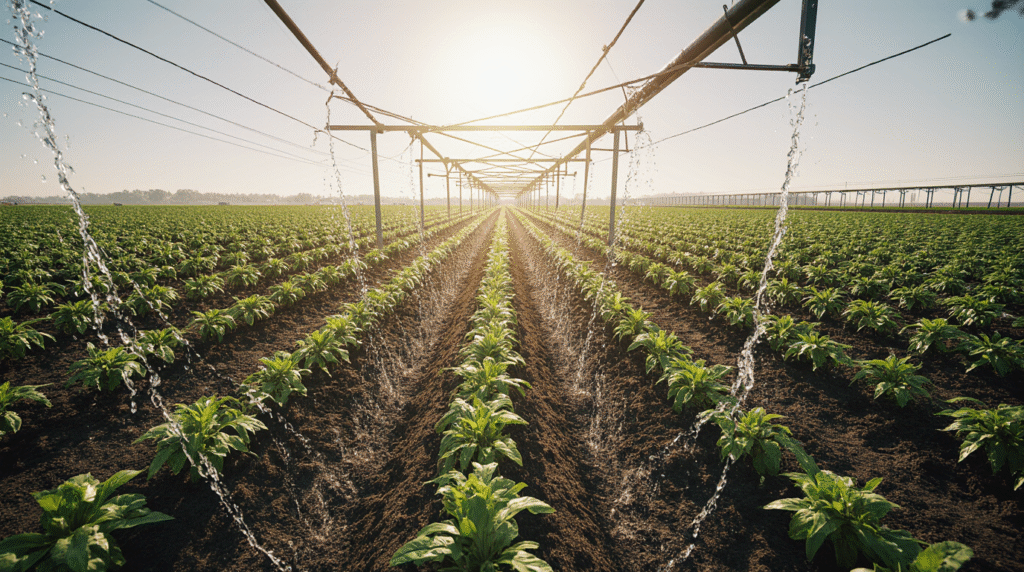
Smart irrigation goes beyond conserving water; it actively supports soil and plant health. Sensors detect nutrient and moisture levels, allowing precise irrigation and fertilization. I’ve managed fields where data-driven watering reduced nutrient runoff and improved soil structure in just one season. Healthier soil creates stronger crops, which in turn secures farmers’ livelihoods. The emotional satisfaction of seeing plants thrive under optimal conditions is indescribable.
Reducing Energy Consumption
By delivering water only where needed, smart irrigation reduces energy use. Pumps run less frequently, and electricity costs drop significantly. On one farm, energy consumption decreased by 25% after implementing a fully automated system. Combining economic efficiency with environmental responsibility makes the smart irrigation system an all-in-one solution for modern agriculture.
Crop-Specific Customization
Different crops have unique water requirements. The system can be programmed for vineyards, vegetables, or cereals, ensuring optimal hydration. On a mixed farm, tomatoes and lettuce received customized irrigation schedules, improving yields and eliminating waste. This flexibility allows farmers to manage diverse crops efficiently and profitably.
System Durability and Maintenance
Modern systems are built for reliability. Regular maintenance is simple, and remote monitoring detects potential issues early. Once installed and calibrated, the system runs efficiently with minimal intervention. Farmers can focus on other tasks, confident that irrigation is optimized automatically.
Software Platforms as Control Centers
Centralized software connects all components, offering dashboards, alerts, and analytics. Farmers can monitor multiple fields remotely and adjust irrigation schedules instantly. User-friendly interfaces make adoption easy, even for those less comfortable with technology.
Renewable Energy Integration
Many systems incorporate solar-powered pumps, reducing reliance on electricity grids. This allows farms in remote areas to operate independently while lowering carbon emissions. I’ve witnessed small-scale farms achieve nearly full energy autonomy with solar integration.
Climate Resilience
With unpredictable weather, resilience is critical. Smart irrigation adapts to droughts, heatwaves, and storms, protecting crops and reducing yield risks. Farmers report higher confidence in their harvests, knowing that environmental challenges are mitigated proactively.
Building Farmer Communities
Technology fosters knowledge-sharing. Farmers exchange insights, data, and results, strengthening local and global networks. At AgriGloba, these communities accelerate adoption and encourage best practices across regions.
Cost-Benefit Analysis
Although initial costs can be high, the ROI is compelling. Savings in water, labor, and energy, combined with higher yields, lead to rapid payback periods. Beyond economics, the system offers peace of mind and long-term sustainability, invaluable for modern farmers.
Future of Smart Irrigation “Smart Irrigation System“
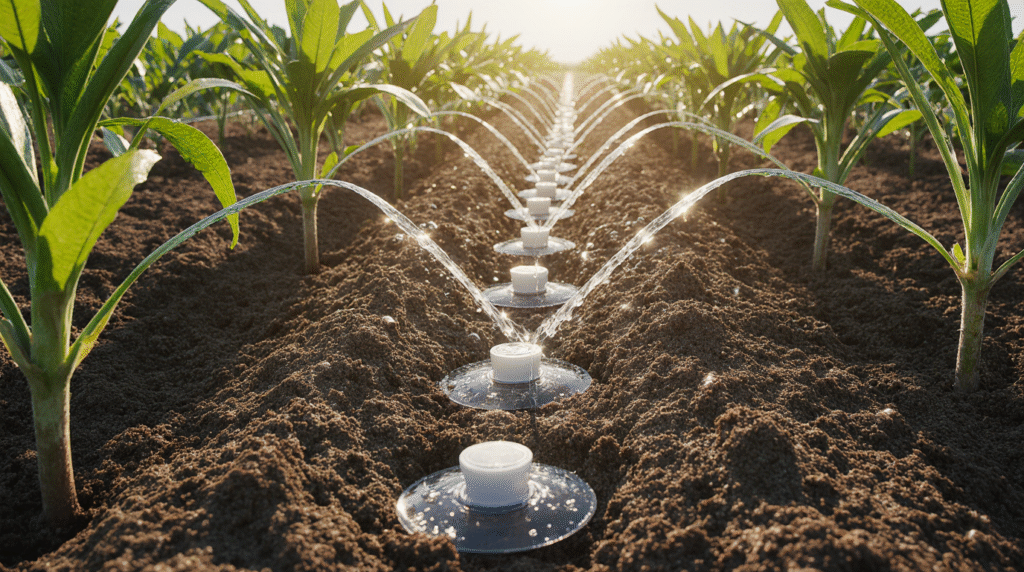
The integration of AI, drones, sensors, and analytics promises even more precise farming. Predictive irrigation and autonomous operation are approaching reality. Early adopters are positioning themselves at the forefront of global agri-tech innovation.
Case Study: Vineyard Success
One vineyard we managed in southern Morocco saw a 30% increase in yield after implementing a smart irrigation system. Drones monitored hydration, AI predicted needs, and the system delivered water precisely. The farmers were amazed at the consistency and quality improvement, reinforcing the system’s value.
Emotional Impact on Farmers
There’s a human side to technology. Farmers experience less stress, more confidence, and renewed hope. Seeing crops thrive through a smart irrigation system strengthens the emotional connection between people and their land.
Scaling Technology Globally
AgriGloba’s partnerships bring these innovations to farms worldwide. Lessons learned locally can be applied internationally, promoting sustainable agriculture on a global scale.
Sustainability Beyond Water
Smart irrigation supports sustainable agriculture by reducing runoff, preserving soil structure, and improving nutrient retention. It’s a holistic approach that balances productivity with environmental care.
Supporting Small-Scale Farmers
Even small farms benefit. Cost-effective versions of smart irrigation systems enable broader adoption. This ensures that all farmers, regardless of size, can improve efficiency and sustainability.
Integration with Other Agri-Tech
Smart irrigation collaborates with pest detection systems. It also integrates with crop monitoring drones and AI-based crop analytics. Together, they create a fully integrated farming ecosystem.
Education and Awareness
Ongoing education ensures farmers understand system capabilities. At AgriGloba, workshops and online tutorials are essential to maximize adoption and long-term impact.
Return on Investment in Practice
Many farmers see ROI within one to two harvest cycles, through water savings, reduced labor, and higher yields. The financial and emotional benefits make it an investment worth considering.
Final Thoughts
The smart irrigation system is transforming agriculture from an uncertain craft into a precise, sustainable science. By integrating AI, drones, data analysis, and global collaboration, farmers gain control, efficiency, and peace of mind. For those seeking modern, sustainable, and profitable farming, this technology is indispensable. AgriGloba continues to lead the way in bringing these innovations to fields worldwide. It proves that the future of agriculture is not just possible — it’s here.